
Discover breathtaking destinations carefully selected unforgettable adventure, cultural experiences, and luxurious designed remarkable journey.
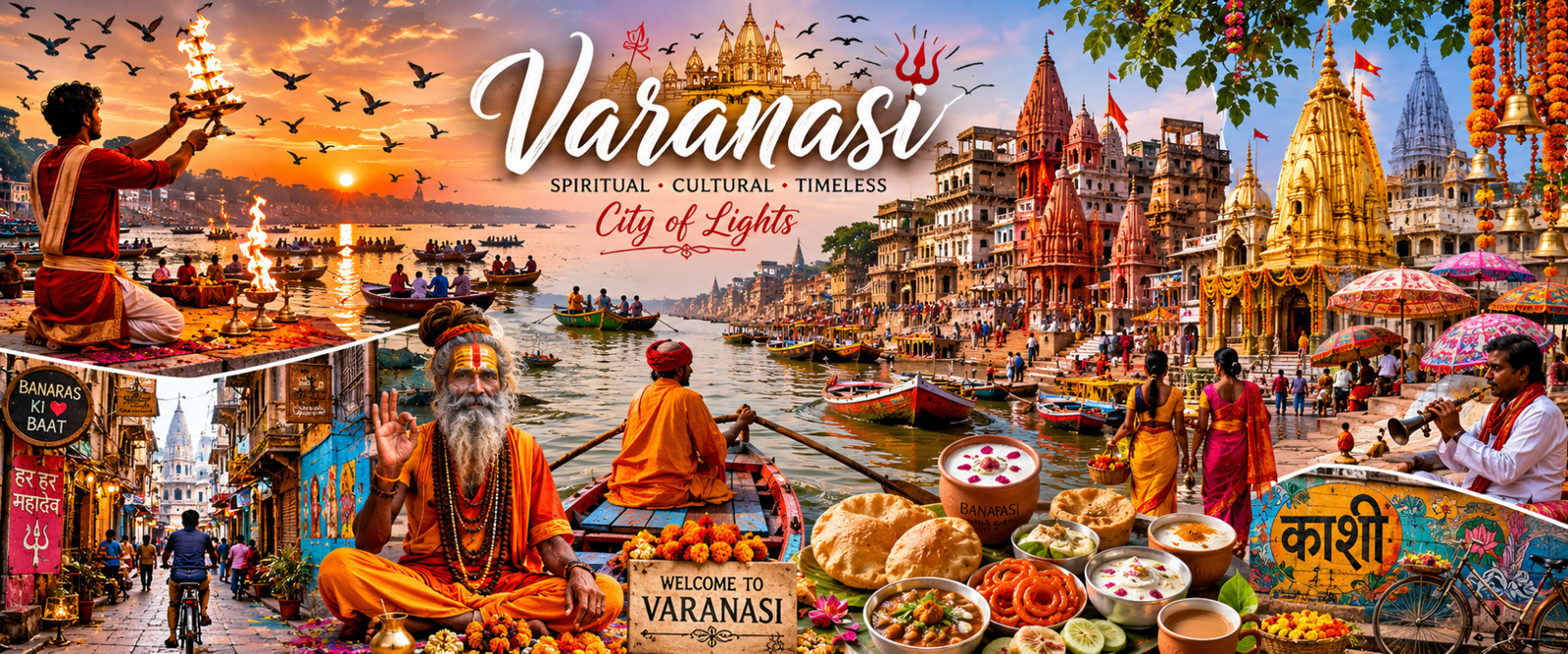
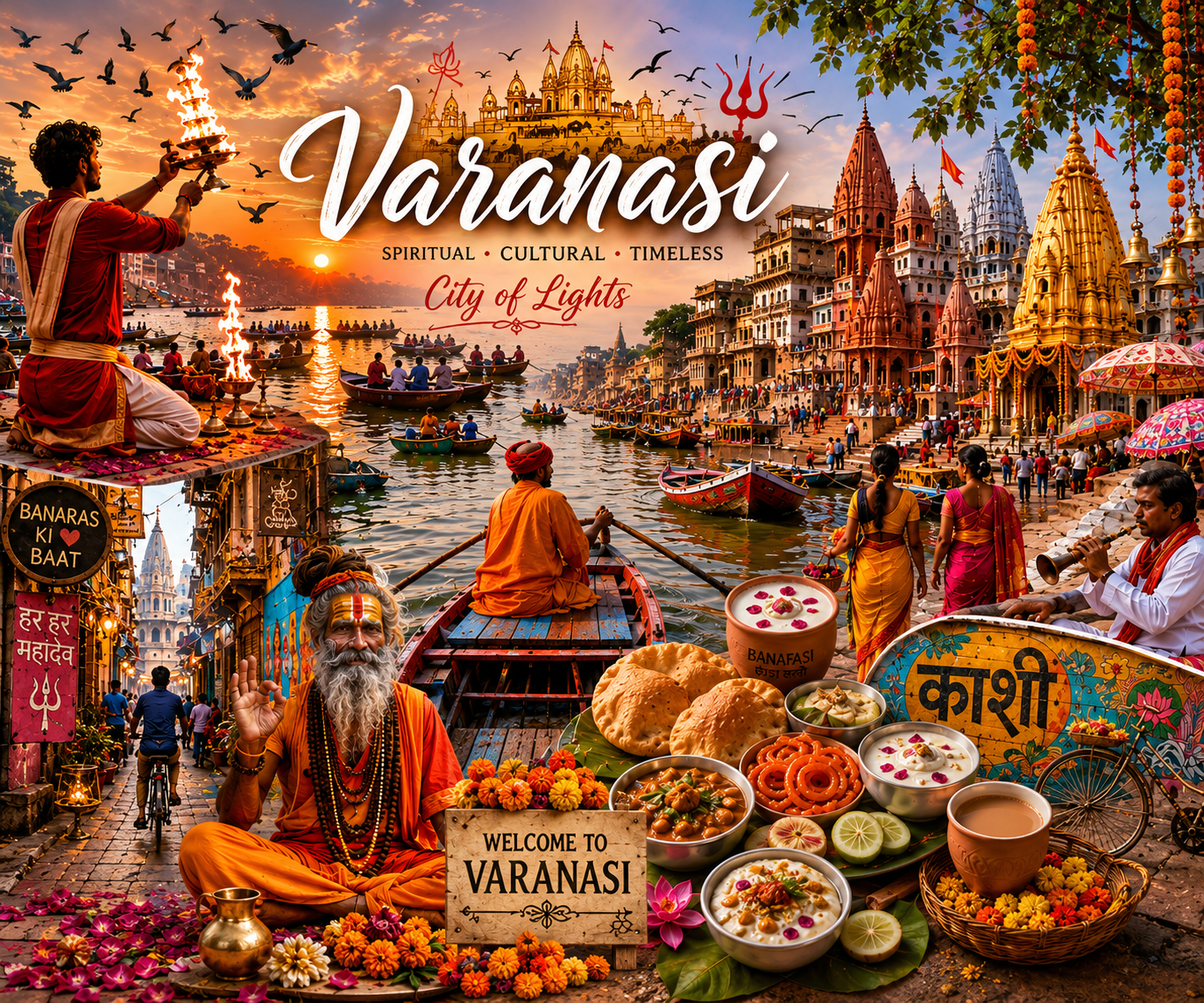
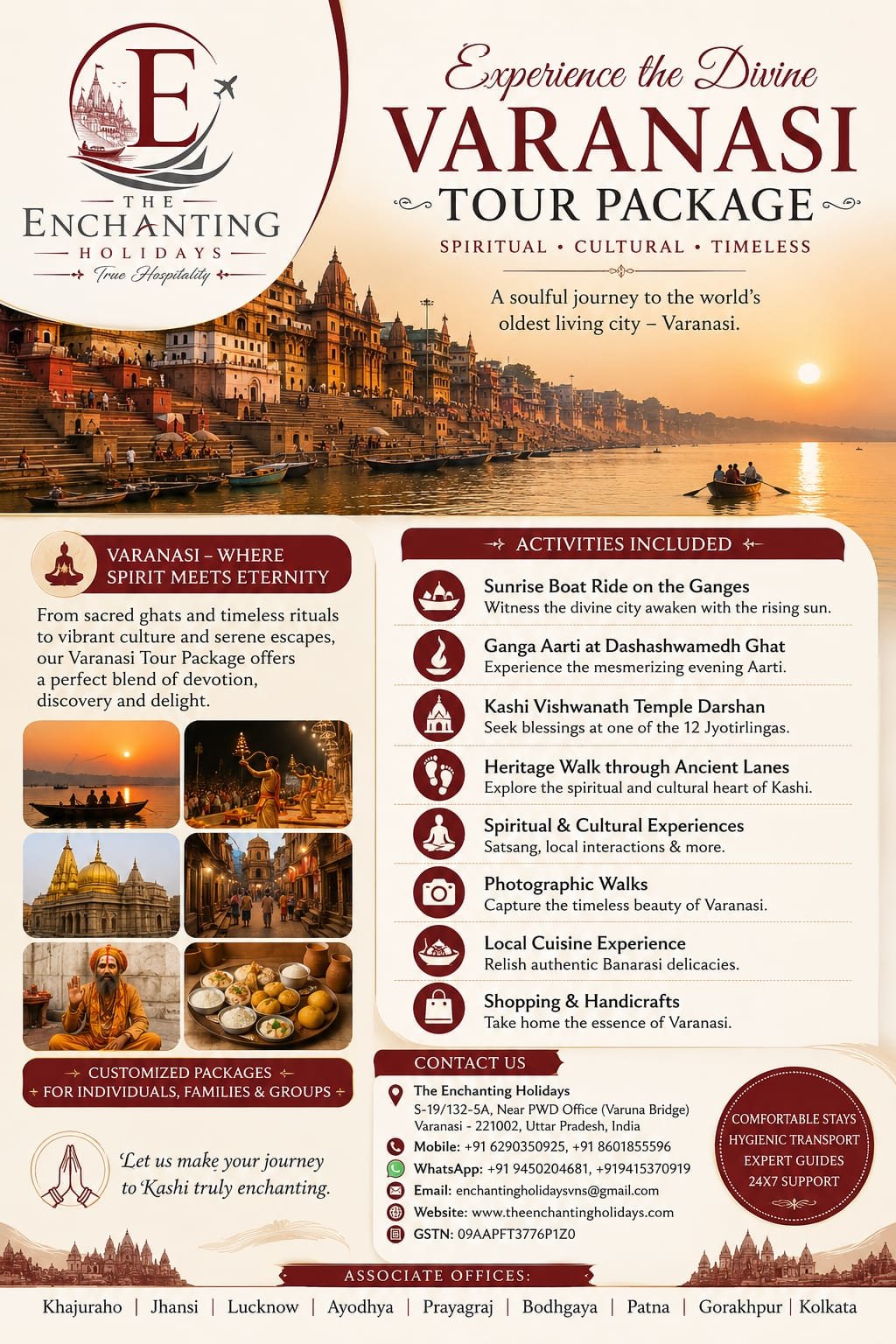
Varanasi, the world’s oldest continuously inhabited city, stands as the ultimate spiritual epicenter of India. Swept by the sacred curves of the River Ganges, it is a timeless destination where ancient traditions, vibrant living heritage, and deep cosmic spirituality seamlessly fuse.
From the mesmerizing, fire-lit steps of the evening Ganga Aarti and centuries-old golden temples to ethereal sunrise boat safaris and the labyrinthine lanes of the Old City, Varanasi delivers an unforgettable, soul-stirring encounter at every turn.
Whether you are a global explorer seeking rare cultural immersion, a photographer looking to capture raw human emotion, a foodie chasing legendary street flavors, or a pilgrim in pursuit of spiritual enlightenment, Kashi welcomes you with open arms and deep devotion.
The Spirit of Kashi: In Varanasi, life and eternity meet on the riverbanks. It is not merely a city to visit, but a profound sensory and spiritual experience that continues to inspire millions of travelers from around the globe.
The Sacred Ghats: Walk across the 84 iconic stone riverfront embankments—from the morning cultural energy at Assi Ghat to the central, bustling steps of Dashashwamedh Ghat and the solemn, eternal fires of Manikarnika Ghat.
The Living Old City: Get lost in the narrow, winding heritage alleys lined with hidden shrines, vibrant spice merchants, and master artisans hand-weaving world-renowned Banarasi Silk.
The Culinary Heritage: Treat your tastebuds to Varanasi’s spectacular street food profile, featuring signature flavors like Tamatar Chaat, fresh Kachori Sabzi, creamy Lassi, and the delicate winter sweet Malaiyyo.
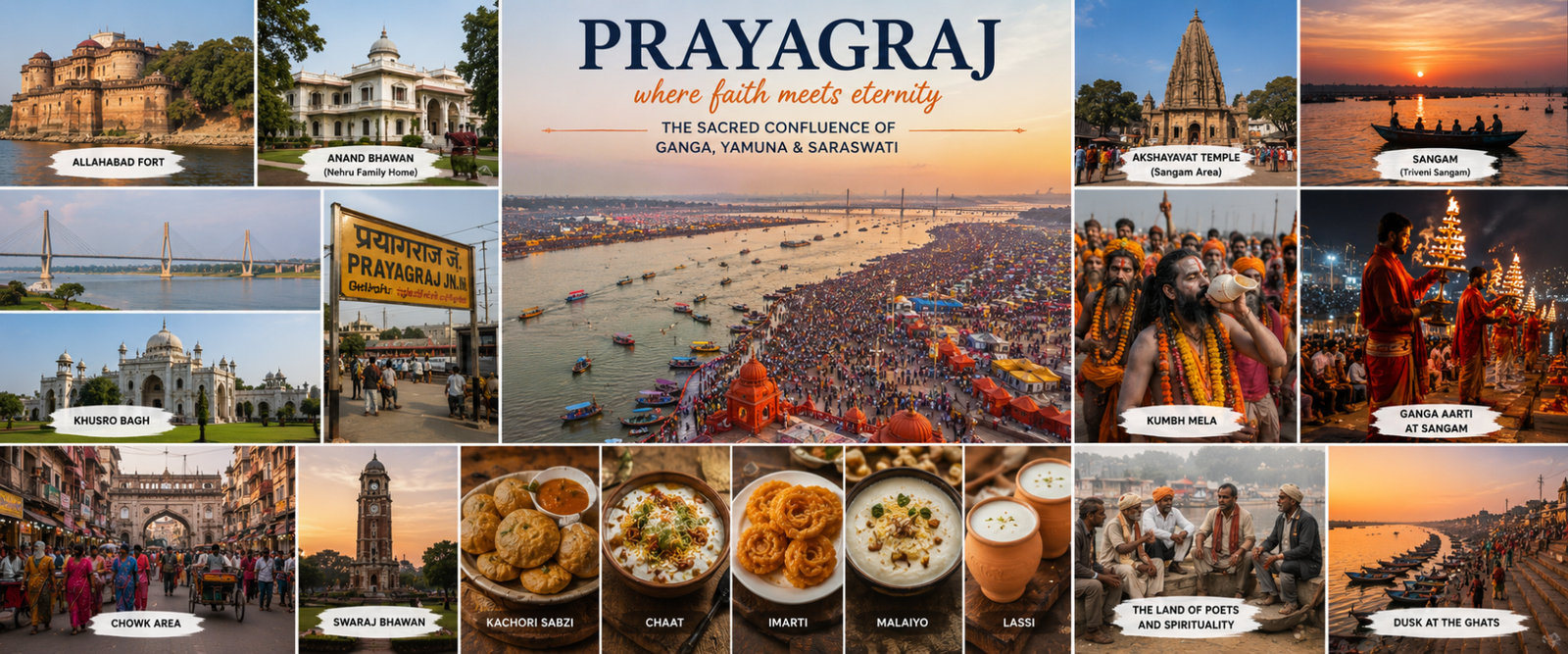
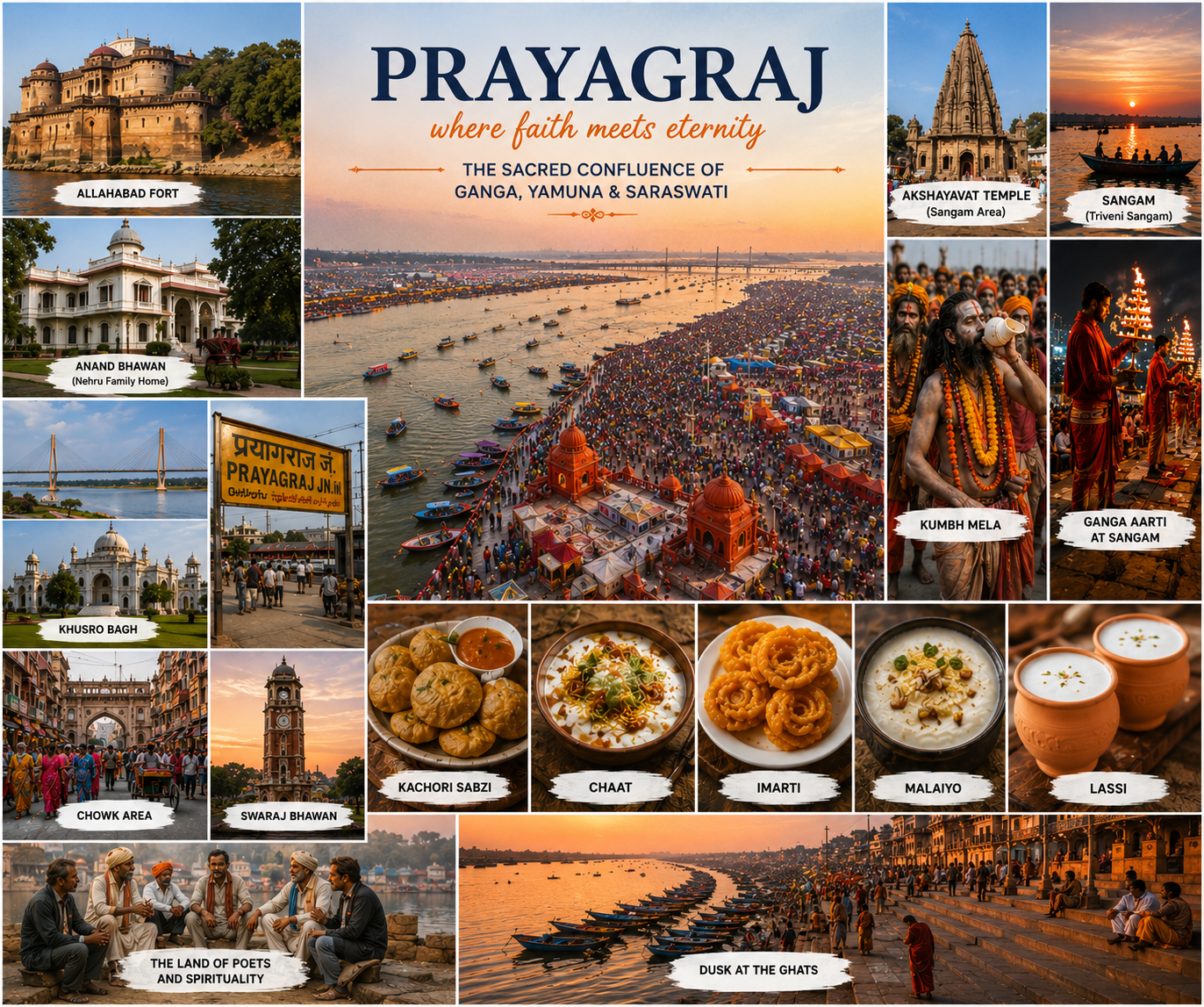
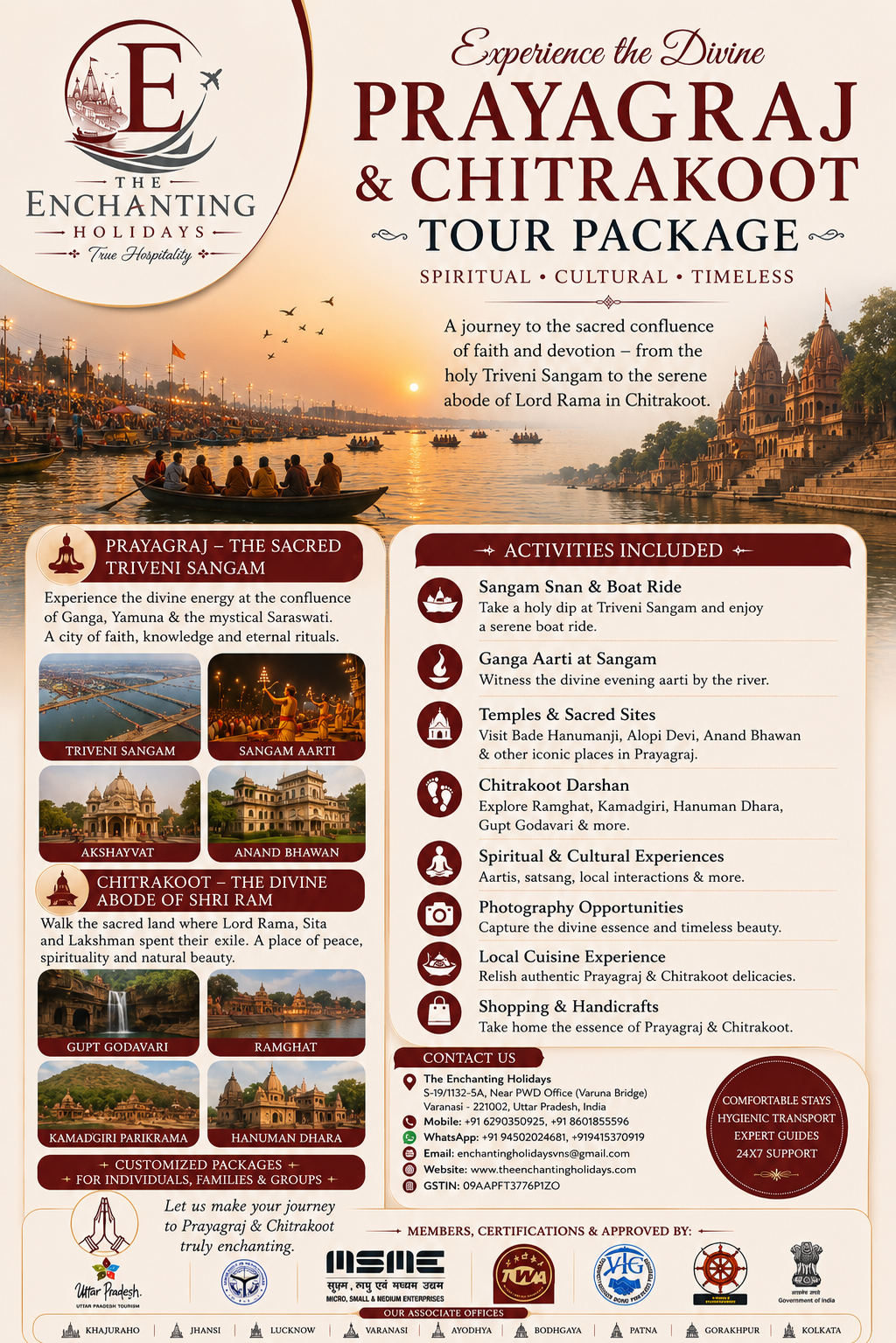
Prayagraj, the historic and sacred City of Sangam, stands as one of India’s most revered pilgrimage destinations. It is the geographic and spiritual anchor where the holy waters of the Ganga and Yamuna merge with the mythical, underground Saraswati River.
Famous globally for hosting the grand Kumbh Mela—the largest peaceful gathering of humanity on Earth—Prayagraj represents a timeless convergence of profound faith, monumental history, and deep cultural heritage.
Whether you are a pilgrim seeking a transformative spiritual cleansing, a history enthusiast retracing the steps of India’s freedom struggle, or a traveler wanting to experience the vastness of Vedic geography, Prayagraj delivers a deeply moving and peaceful atmosphere.
The Power of Sangam: Taking a holy dip at the Triveni Sangam is believed to cleanse the soul and liberate one from the cycle of rebirth. It is a place where cosmic energies are said to align, offering every visitor an unforgettable sense of peace and devotion.
Triveni Sangam: Board a traditional wooden boat from the banks to travel out to the middle of the river, where you can witness the distinct colors of the rivers meeting and take a sacred dip (snan).
Imperial & Nationalist History: Explore the massive riverside Allahabad Fort built by Emperor Akbar in 1583, and walk through Anand Bhavan, the beautifully preserved ancestral home of the Nehru family that served as a nerve center for India’s independence movement.
Sacred Shrines: Pay homage at the unique Bade Hanuman Mandir, a subterranean shrine housing a massive, reclining idol of Lord Hanuman, and seek blessings at the ancient Alopi Devi Temple, a highly revered Shakti Peeth.
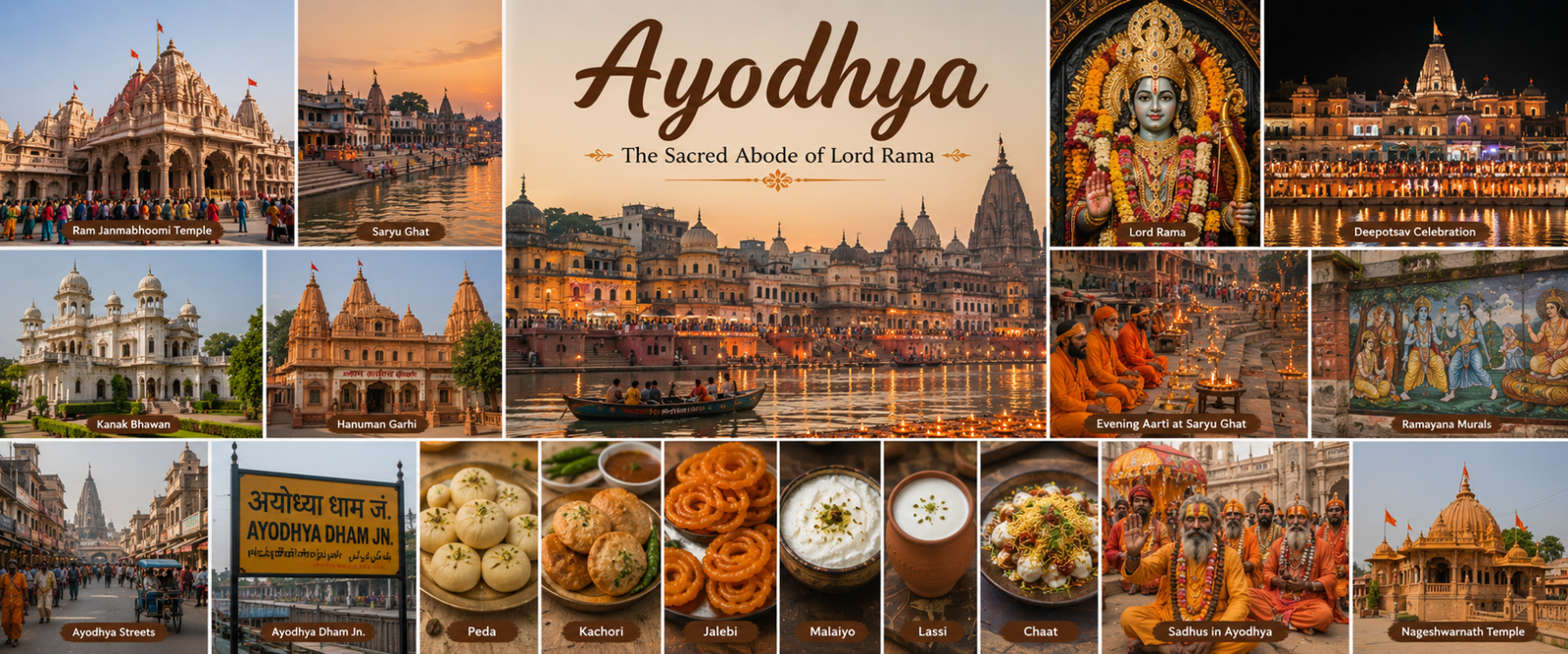
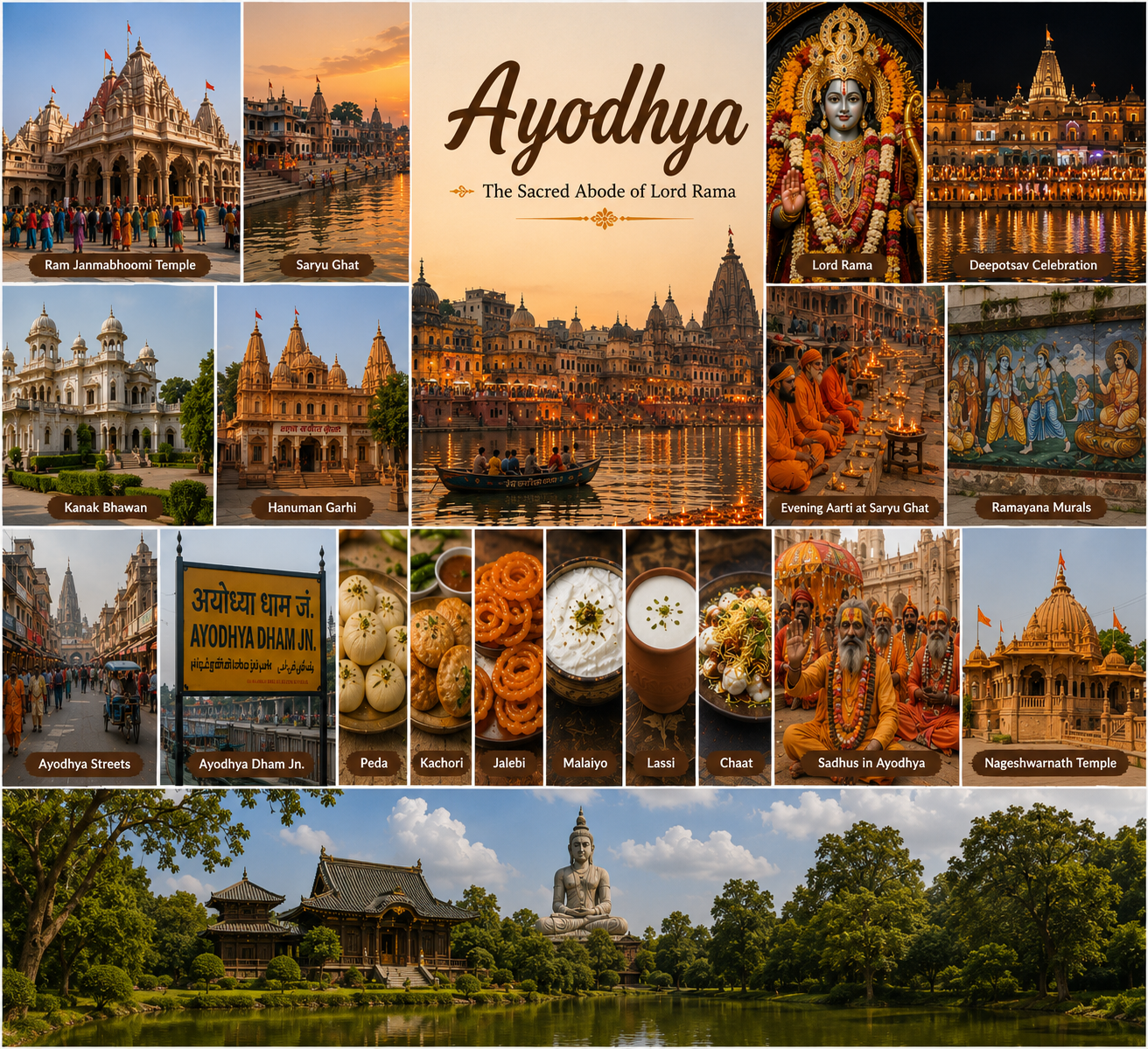
Ayodhya, the ancient and revered birthplace of Lord Ram, stands as one of the most foundational pillars of India’s spiritual and cultural landscape. Gracefully situated on the banks of the holy Saryu River, this timeless city is celebrated around the world for its deep scriptural significance, newly rising architectural marvels, and a heritage that spans millennia.
Now completely transformed into a world-class pilgrimage hub, Ayodhya radiates an atmosphere of profound peace, rich devotion, and vibrant living traditions—inviting travelers from every corner of the globe to experience the very heart of India’s historic legacy.
Whether you are a devotee fulfilling a lifelong pilgrimage dream, a cultural explorer studying ancient Indian epics, or a photographer capturing the glow of millions of festive lamps, Ayodhya delivers an experience that is both deeply moving and universally inspiring.
The Spirit of Ayodhya: Meaning “that which cannot be subdued by war,” Ayodhya is a city of resilience and peace. Walking through its sacred grounds, you don’t just witness history—you step directly into a living epic that continues to shape the soul of India.
Shri Ram Janmabhoomi Mandir: Stand in awe before the magnificent, freshly realized grand temple complex, hand-carved out of pristine pink sandstone and home to the mesmerizing idol of Ram Lalla.
The Guardian Fortress: Climb the high stone steps of Hanuman Garhi, a massive 10th-century cave temple shaped like a fort, where Lord Hanuman is said to live and protect the city.
Palaces and Riverfronts: Step inside the exquisite golden courtyards of Kanak Bhawan, a palace temple famously gifted to Goddess Sita, and stroll along the spectacularly designed banks of Ram Ki Paidi to watch the majestic evening Saryu Aarti.
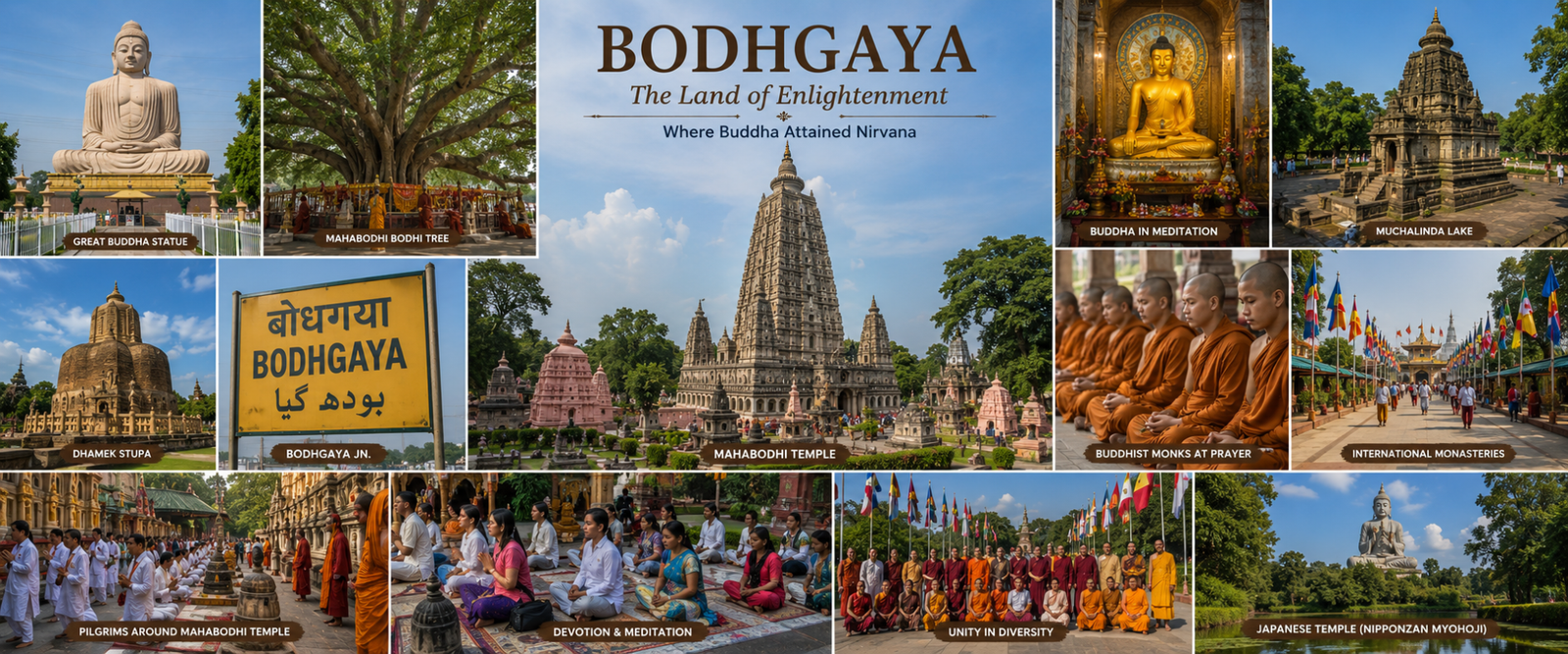
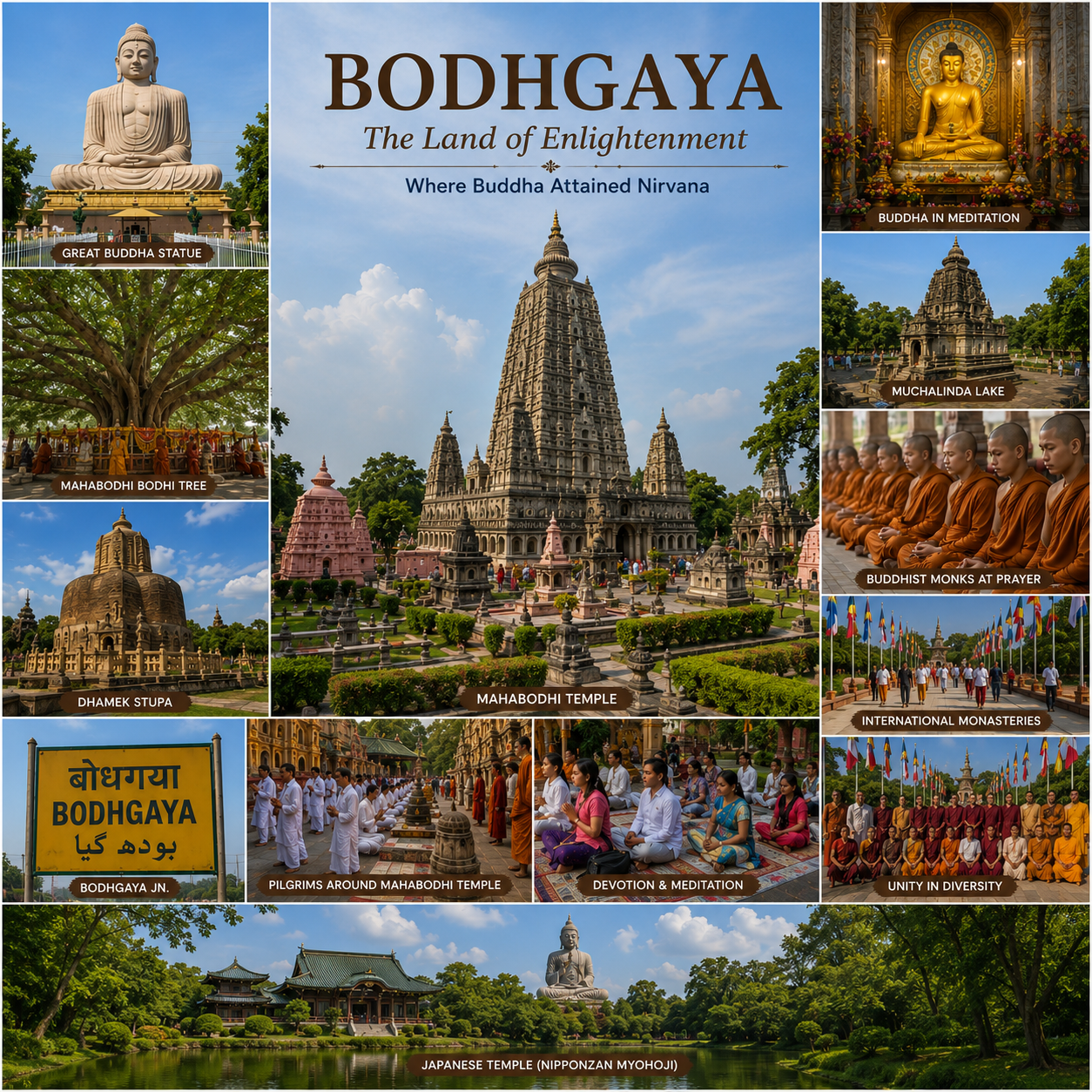
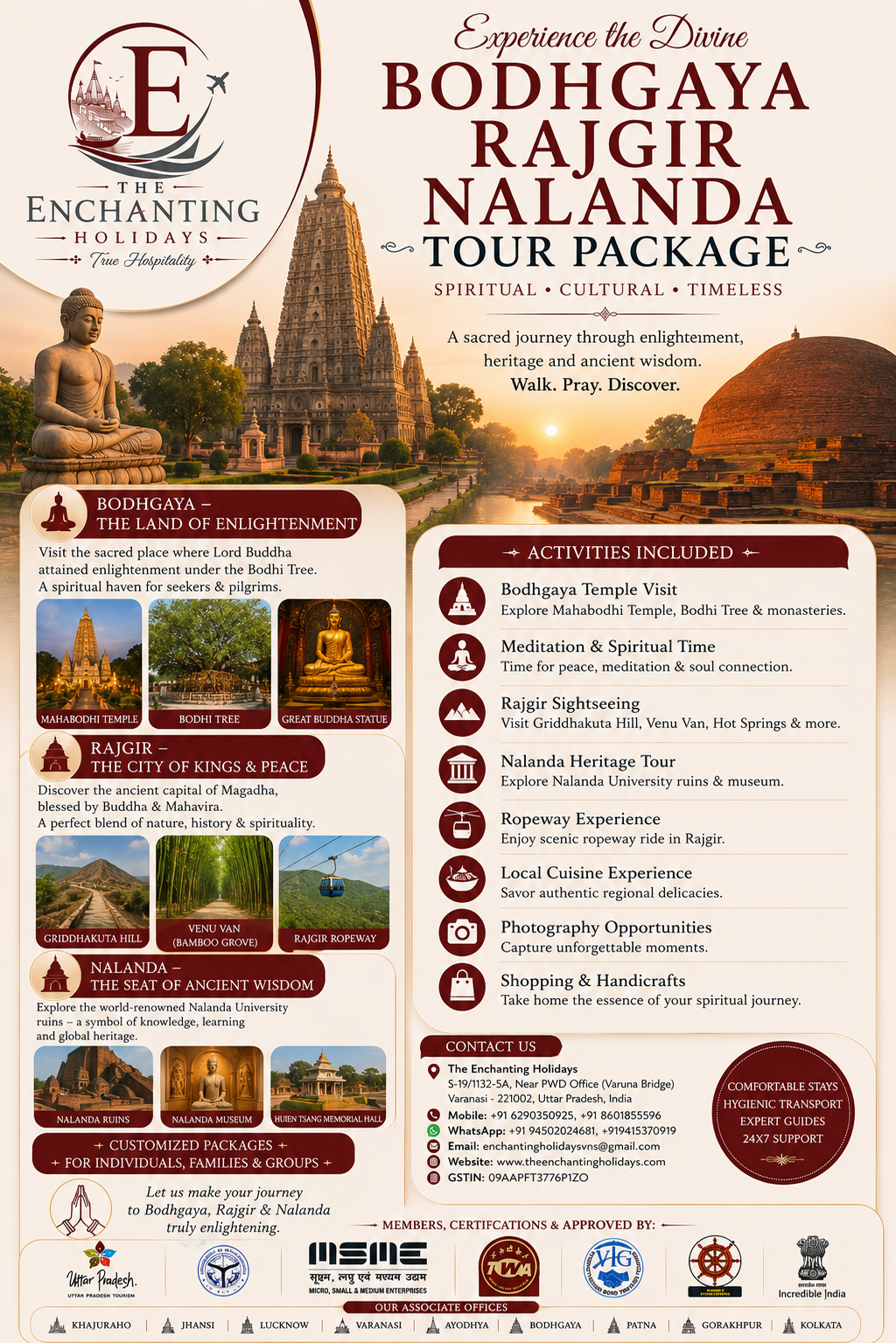
Bodh Gaya stands as the ultimate anchor of Buddhist heritage and one of the world’s most profoundly revered pilgrimage sites. It is here, beneath the shelter of the sacred Bodhi Tree more than 2,500 years ago, that Siddhartha Gautama sat in deep meditation, defeated cosmic ignorance, and attained supreme enlightenment to become the Buddha.
A UNESCO World Heritage Site, this incredibly tranquil destination draws thousands of spiritual seekers, historians, and travelers from every corner of the globe, all arriving in search of inner peace, timeless wisdom, and global cultural harmony.
Whether you are looking to immerse yourself in hours of silent meditation, explore ancient monastic architectures, or discover the foundational history of one of the world’s major philosophies, Bodh Gaya offers an unforgettably serene atmosphere that slows down time.
The Spirit of Awakening: To sit within the courtyard of Bodh Gaya is to experience a rare, global quietude. It is a space where ancient history lives through the soft rustle of peepal leaves and the synchronized prayers of monks from across the world.
Mahabodhi Temple Complex: Walk through the beautifully manicured gardens to admire the iconic 50-meter-tall stone temple spire, dating back to the classical era and filled with ancient geometric relief carvings.
The Sacred Bodhi Tree: Pay silent respects beneath the direct lineage descendant of the historic tree where the Buddha sat on the Vajrasana (the diamond throne) to unlock the mysteries of existence.
Global Monastery Circuit: Journey across the globe without leaving the town by exploring the diverse, vibrant international monasteries—including the ornate Thai Temple, the colorful Tibetan Monasteries, and the minimalist Japanese Zen temple spaces.
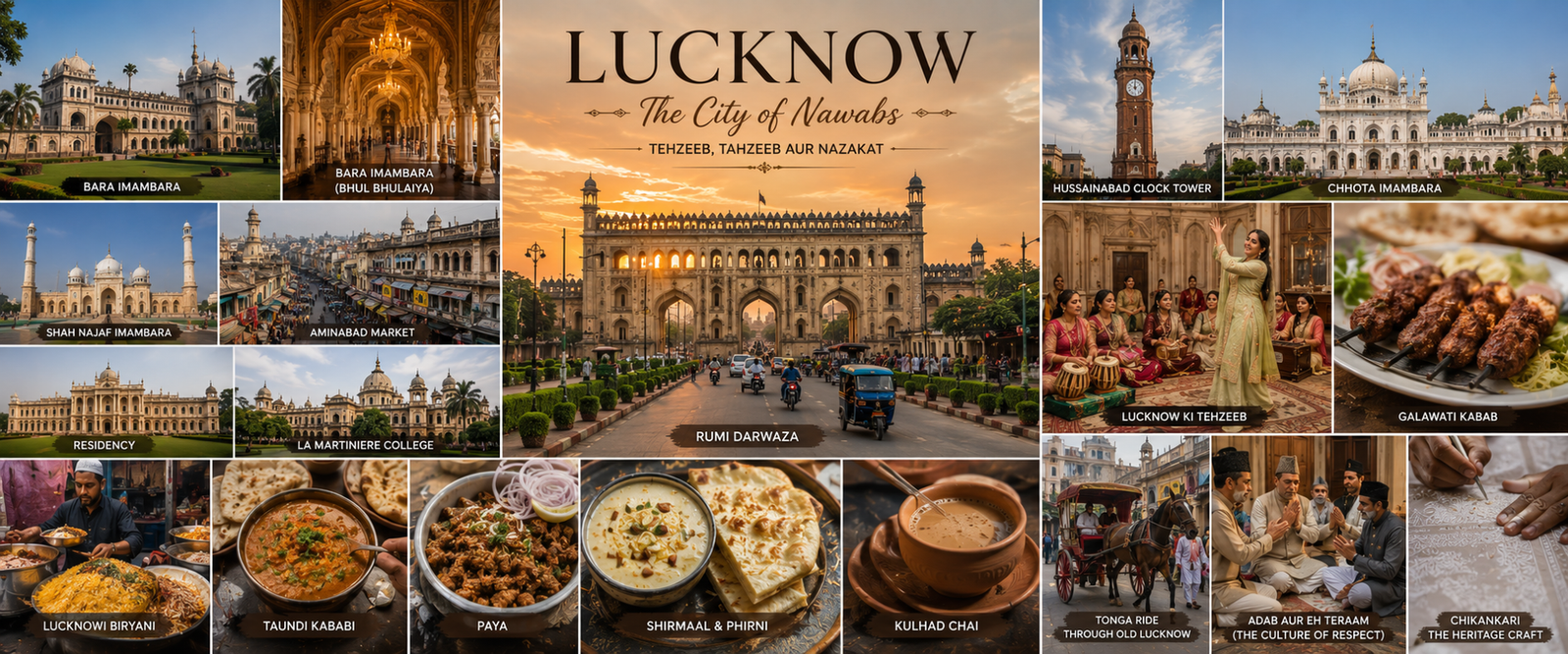
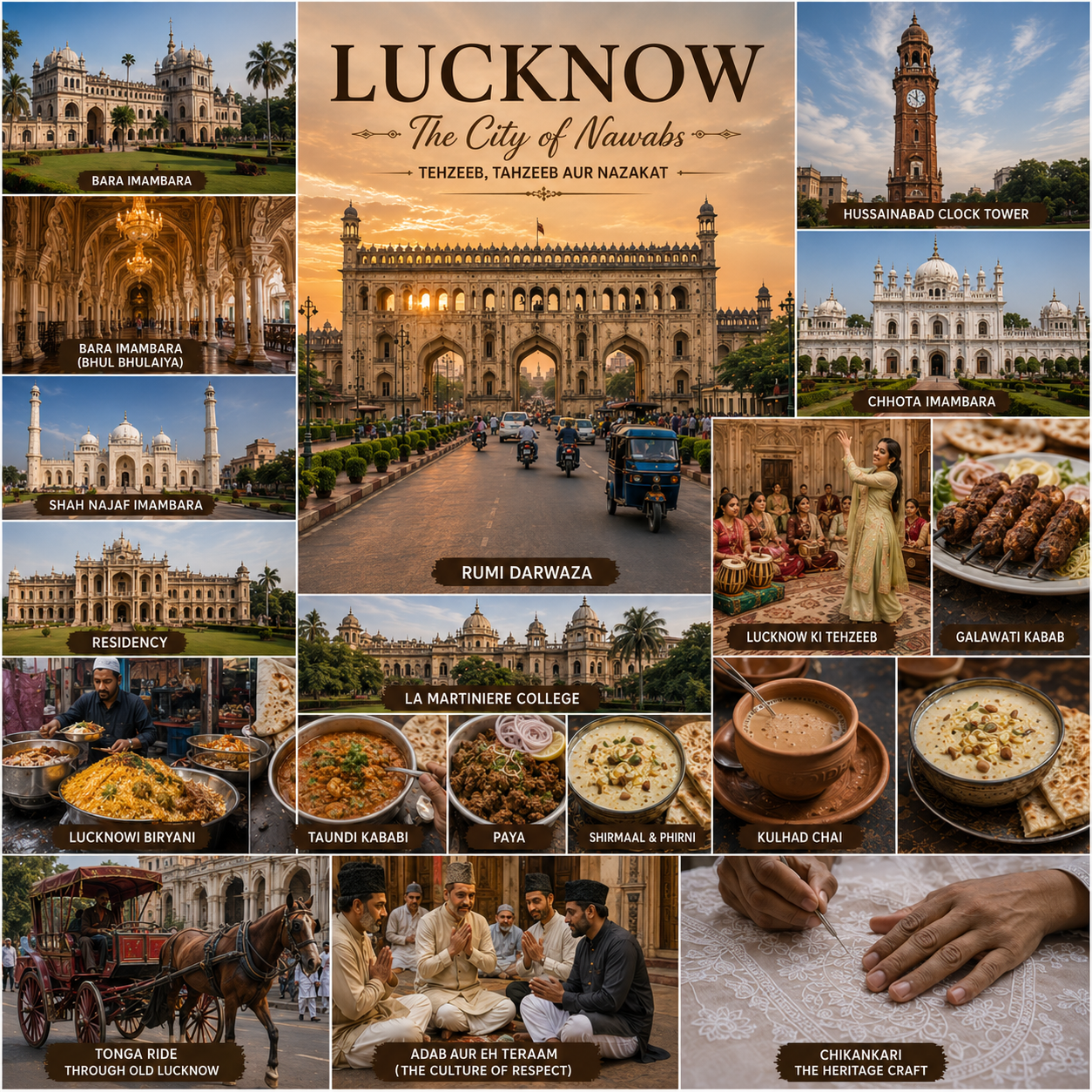
Lucknow, the elegant capital of Uttar Pradesh, stands as a grand monument to India’s royal heritage, refined culture, and legendary hospitality (Mehmaan-nawaazi). Famously known as the City of Nawabs, Lucknow beautifully blends its historical Awadhi grandeur with a sophisticated modern lifestyle, captivating travelers with its poetic charm, exquisite architecture, and timeless grace.
From sprawling, pillarless structural marvels to the fine artistry of its markets, Lucknow invites you to experience a world where history is etched into every gateway and politeness (Tehzeeb) is a way of life.
Whether you are an architecture enthusiast decrypting ancient engineering secrets, a textile lover searching for masterfully hand-embroidered fabrics, or a dedicated foodie tracking down the secrets of royal slow-cooked delicacies, Lucknow leaves an indelible mark on your soul.
The Essence of Awadh: Lucknow is a city that demands to be experienced slowly. It lives not just in its monumental brick and mortar, but in the aroma of melting kebabs, the rustle of fine Chikankari threadwork, and the gentle cadence of its local speech.
Architectural Wonders: Explore the magnificent Bara Imambara, world-renowned for its gravity-defying central hall built entirely without pillars, and try to find your way through its incredible rooftop labyrinth, the Bhool Bhulaiya.
The Royal Gateway: Drive past the Rumi Darwaza, a striking 60-foot-tall signature archway inspired by ancient portals in Istanbul, serving as the proud face of old Awadhi style.
Awadhi Gastronomy & Craft: Treat yourself to a legendary culinary trail featuring melt-in-the-mouth Tunday Kebabs, aromatic Awadhi Biryani, and local sweets like Prakash ki Kulfi. Afterward, explore the bustling lanes of Hazratganj or Aminabad to shop for authentic, hand-woven Chikankari embroidery.
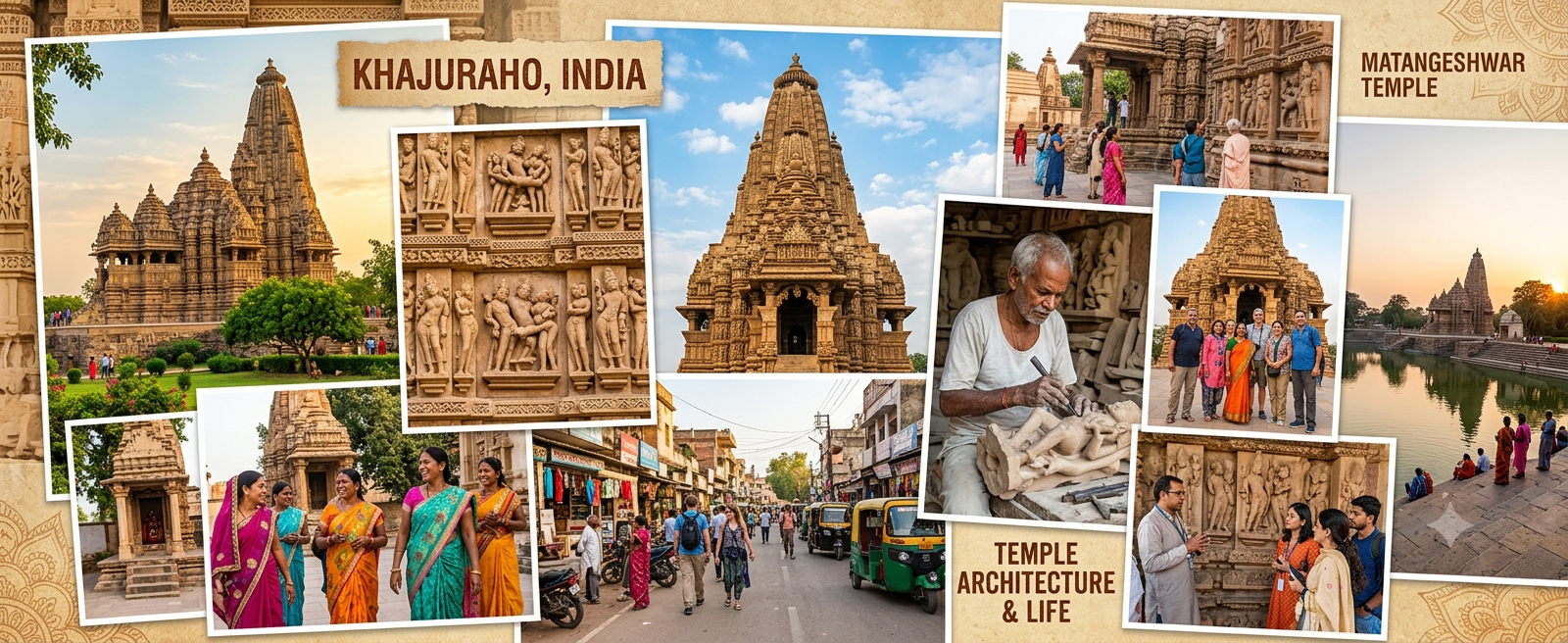
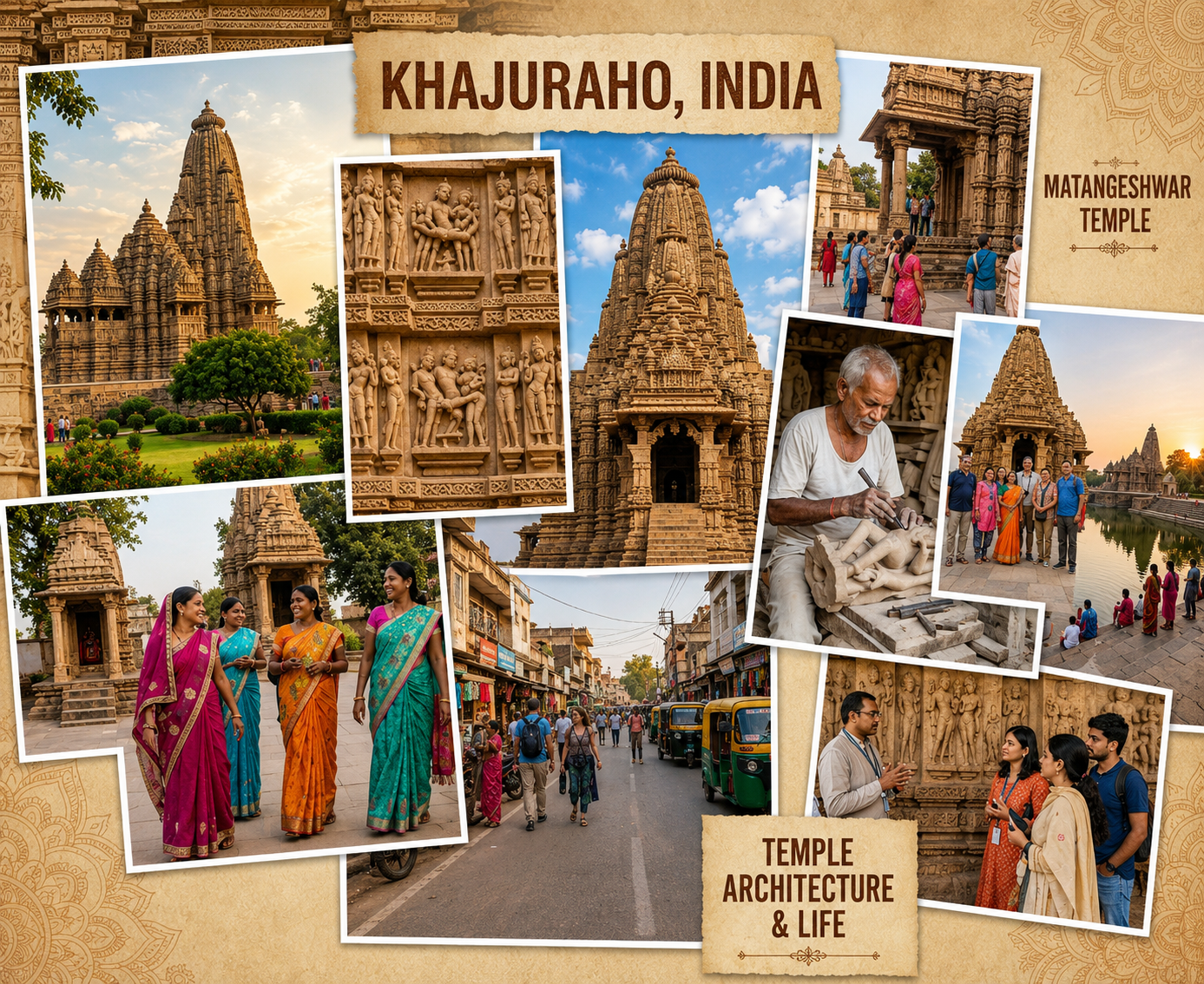
Khajuraho, a globally celebrated UNESCO World Heritage Site, stands as a crowning testament to India’s golden age of architectural and sculptural mastery. Built by the visionary rulers of the Chandela dynasty between the 9th and 12th centuries, this breathtaking temple complex is world-renowned for its intricate, expressive carvings that beautifully intertwine spirituality, human emotion, fine arts, and the vibrant rhythms of everyday medieval life.
Far beyond their popular representations, the temples of Khajuraho showcase a sophisticated philosophy where the sacred and the celebratory exist in perfect, harmonious balance, carved indelibly into shimmering sandstone.
Whether you are a history enthusiast decrypting medieval Indian iconography, an art lover marveling at the fluidity of stone craftsmanship, or a conscious traveler soaking in the serene rural charm of Madhya Pradesh, Khajuraho delivers a deeply enriching and unforgettable sensory experience.
The Spirit of Khajuraho: To walk through these manicured temple complexes is to step inside a living canvas. The walls do not merely stand; they dance, celebrate, pray, and reflect the full spectrum of human existence with an artistic excellence that has remained unmatched for over a thousand years.
The Western Group of Temples: Explore the largest and most spectacular cluster of temples, featuring the soaring Kandariya Mahadeva Temple—dedicated to Lord Shiva—which boasts a magnificent spire mimicking the holy peaks of Mount Kailash.
Symphony of Light & Sound: Spend your evening at the open-air theater to witness a captivating Light & Sound Show, narrated in resonant voices that recount the fascinating myths, rise, and rediscovery of the Chandela dynasty.
Eastern & Southern Enclaves: Discover the serene Jain temples of the Eastern Group, including the beautifully preserved Parsvanath Temple, and visit the solitary, striking Duladeo Temple further south to witness a different phase of architectural evolution.
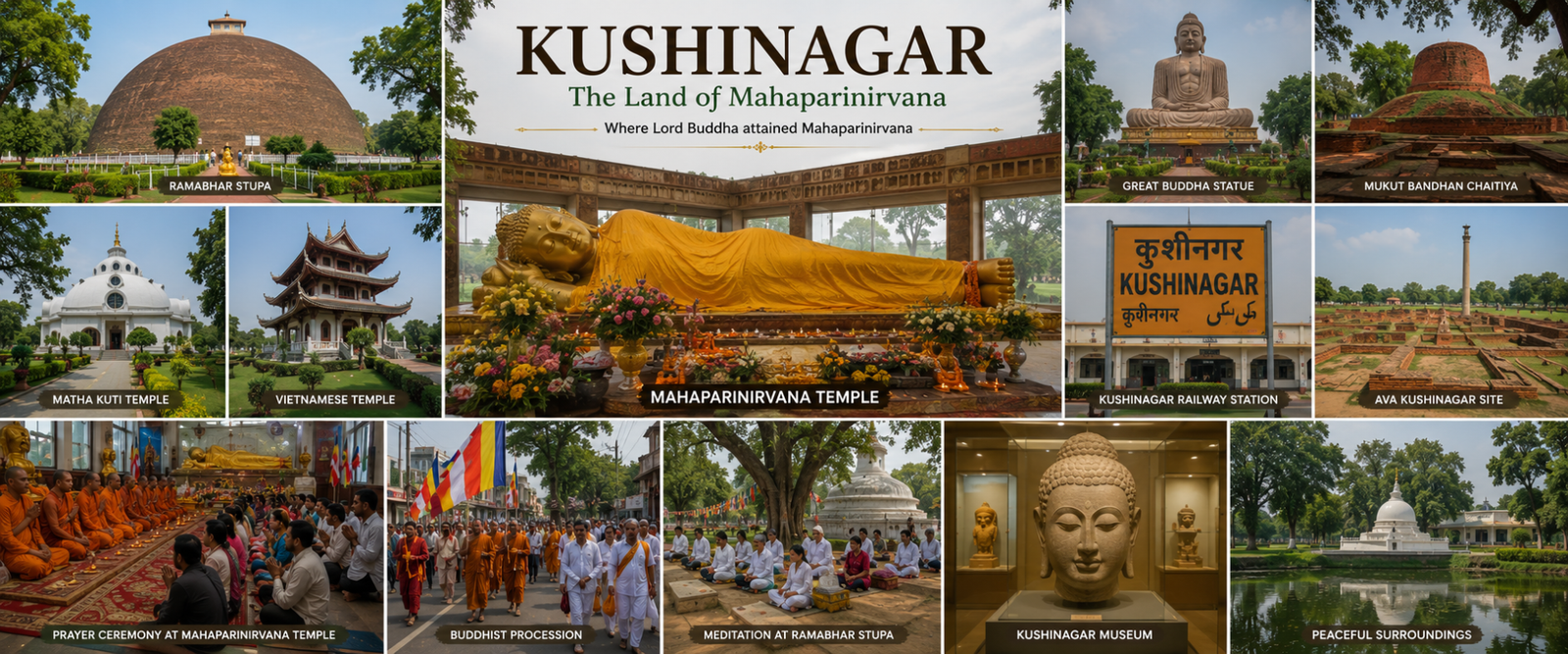
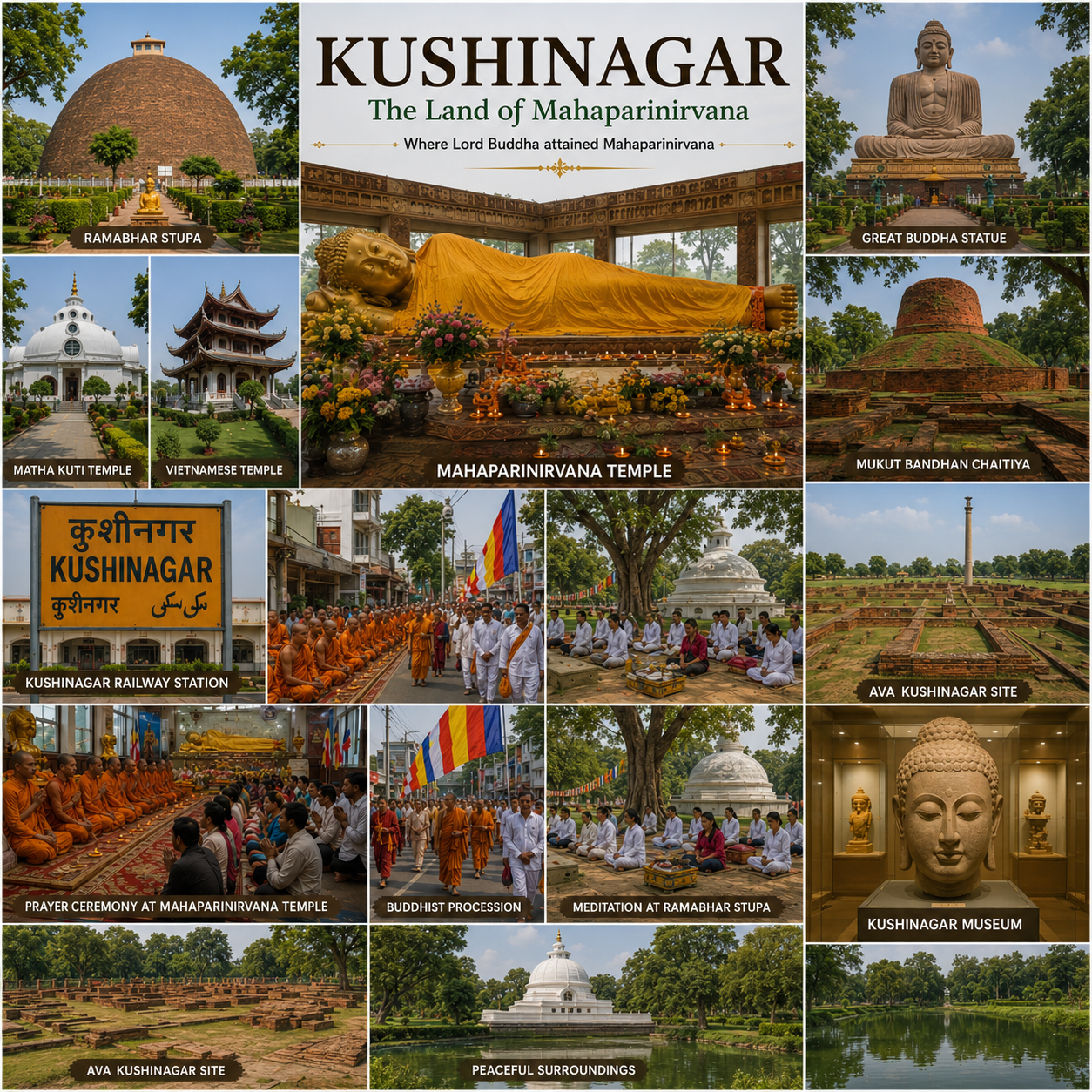
Kushinagar is one of the four most sacred pilgrimage destinations in Buddhism, marking the historic site where Lord Buddha delivered his final sermon and attained Maha Parinirvana (the ultimate liberation after death) under the twin Sal trees. It is a place deeply saturated with supreme peace, quietude, and profound historical resonance.
Located in the eastern pocket of Uttar Pradesh, this tranquil town attracts global pilgrims, monks, and heritage travelers who come to meditate, reflect, and walk through beautifully manicured archaeological gardens that date back to Emperor Ashoka’s era.
Whether you are a pilgrim tracing the holy footsteps of the Buddha, a history enthusiast exploring ancient brick foundations, or a traveler seeking a quiet, meditative escape from bustling urban circuits, Kushinagar offers a uniquely serene and grounding experience.
The Spirit of Parinirvana: Kushinagar does not carry the chaotic energy of typical tourist towns. Instead, it offers a vast, gentle quietness. It is a space where the air feels still, inviting introspection, silence, and a deep appreciation for the transient nature of life.
Mahaparinirvana Temple & Stupa: Step inside the serene white temple to stand before the breathtaking 6.1-meter-long reclining statue of Lord Buddha, carved out of a single block of monolithic sandstone in the 5th century CE, depicting his final moments of earthly departure.
Ramabhar Stupa (Mukut-Bandhan Chaitya): Walk along the peaceful pathways to view this magnificent 15-meter-high brick mound, marking the exact historical spot where Lord Buddha was cremated and his relics were distributed.
Matha Kuar Shrine: Pay respects at this nearby enclave housing a stunning, 3-meter-tall black stone statue of Buddha carved from a single block, depicting him in the Bhumi Sparsha Mudra (earth-touching gesture).
International Monasteries: Explore a unique global layout of temples constructed by international Buddhist communities, including the beautifully detailed Thai Temple, the elegant Japanese Temple, and vibrant Linh Son Vietnamese monastery spaces.
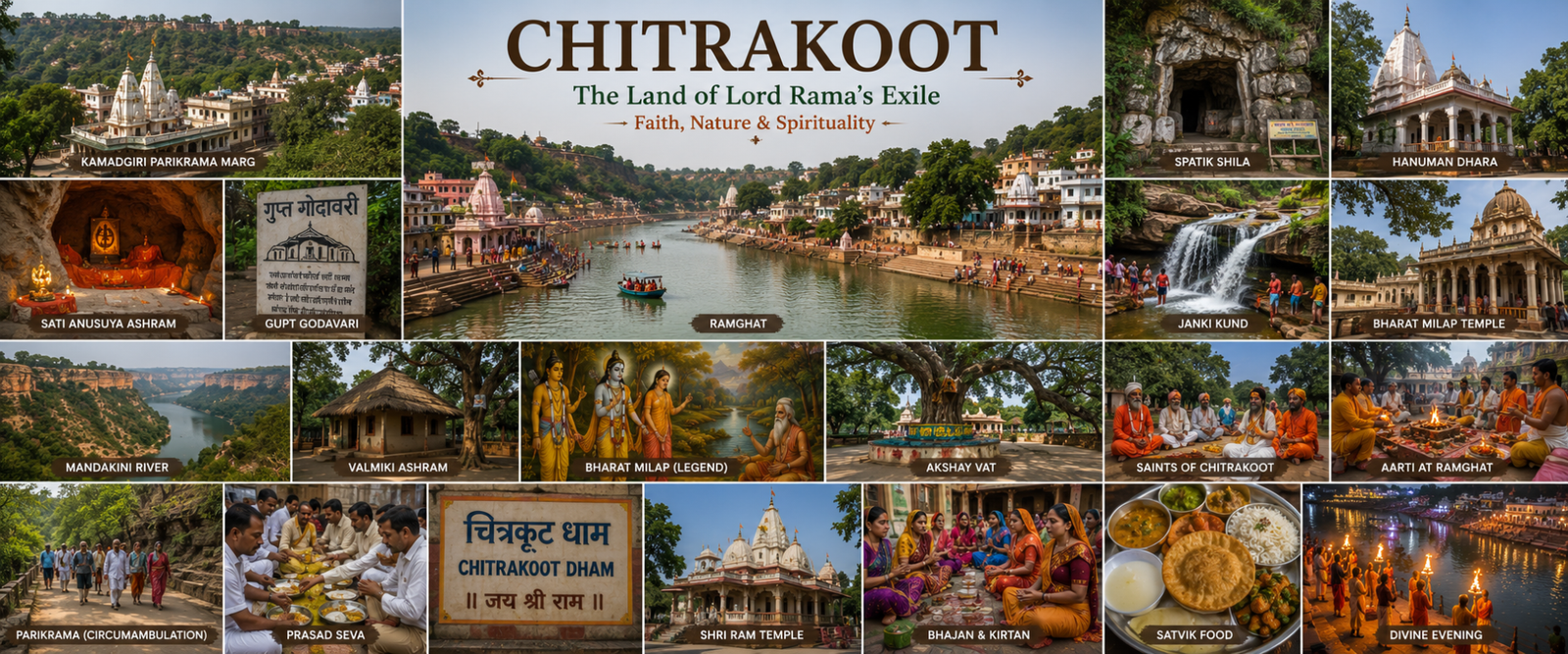
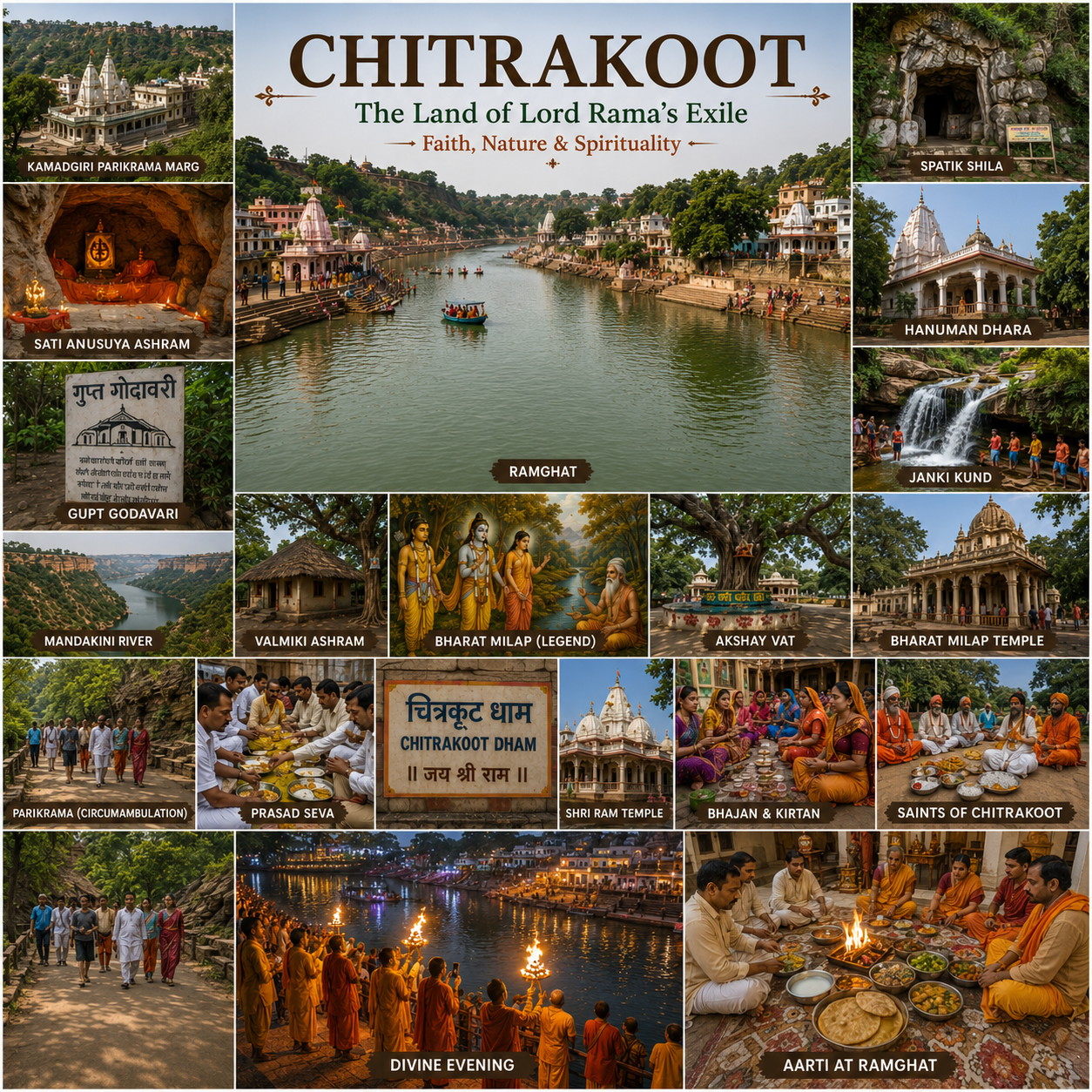
Chitrakoot, translated as the “Hill of Many Wonders,” is a deeply revered pilgrimage site layered with intense spiritual history, dense forest trails, and quiet river banks. Straddling the border of Uttar Pradesh and Madhya Pradesh, this tranquil town is famously celebrated in the epic Ramayana as the sanctuary where Lord Rama, Sita, and Lakshmana spent over eleven years of their fourteen-year exile.
Steeped in a profound sense of devotion, Chitrakoot isn’t just a place of temples; it is a landscape where legends feel woven into the very forests, waterfalls, and flowing rivers.
Whether you are a devout pilgrim tracing ancient scriptural milestones, a nature explorer looking for hidden forested streams, or a traveler seeking an absolute escape into slow-paced, traditional Indian heritage, Chitrakoot offers a peaceful space for reflection.
The Spirit of Chitrakoot: Unlike busier, fast-paced holy cities, Chitrakoot retains an undisturbed, rustic innocence. The daily rhythms are anchored entirely by the ringing of evening bells (Aarti) along the river and the quiet footsteps of pilgrims circling its holy hills.
Ram Ghat: Spend your evening on the banks of the Mandakini River. Sit on the stone steps to watch the deeply moving evening Aarti, or take a quiet, brightly covered boat ride along the calm waters.
Kamadgiri Hill: Partake in the foundational ritual of Chitrakoot by completing the 5-kilometer Parikrama (circumambulation) path around this lush, forested hill, believed to be the original home of Lord Rama during his stay.
Bharat Milap Mandir: Visit this poignant spot on the Kamadgiri foothills, which marks the exact emotional meeting place where Prince Bharat convinced Lord Rama to return his wooden sandals (Charan Paduka) to place upon the throne of Ayodhya.
Gupt Godavari & Anusuya Ashram: Explore the fascinating Gupt Godavari, a pair of natural, dark cave systems where water flows continuously at ankle depth. Afterward, venture deeper into the forest to visit the peaceful ashram dedicated to Sati Anusuya, located near the origin of the Mandakini.
Take advantage of limited-time travel experiences, premium accommodations, and exceptional value for your dream getaway.
Connect with our travel experts today and unlock personalized adventures, seamless bookings, exclusive offers, and unforgettable experiences tailored perfectly.
True Hospitality. Memorable Journeys.
Associate Offices: Khajuraho · Jhansi · Lucknow · Ayodhya · Prayagraj · Bodhgaya · Patna · Gorakhpur · Kolkata
Copyright © The Enchanting Holidays | Powered By Adkrishna